Maintenance Execution Records
Transforming preventive and corrective maintenance from checkbox compliance into verified execution evidence.
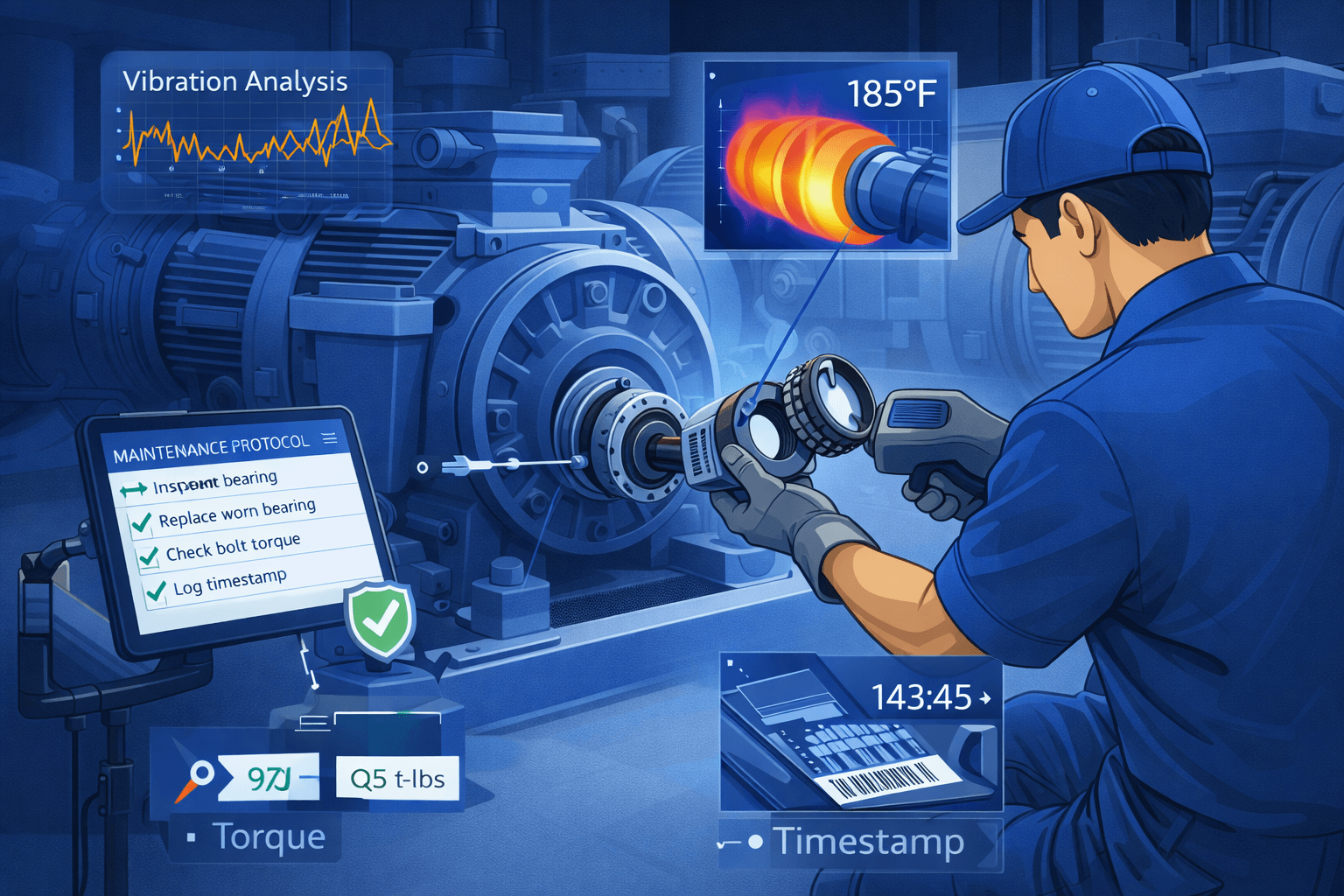
Maintenance Keeps Critical Assets Running
Maintenance is performed on schedule or in response to failures. Bearings are lubricated. Filters are replaced. Calibrations are verified. Wear components are swapped. Each task is intended to prevent downtime or restore functionality.
But when maintenance is complete, how do you know it was done correctly? Maintenance logs say tasks were completed. But logs do not prove execution quality. They prove someone checked a box.
The Maintenance Verification Gap
Traditional maintenance documentation fails to verify work quality:
Tasks marked complete without evidence
"Lubricated bearing" is checked off, but was the correct lubricant used? Was the proper quantity applied?
Parts replaced without traceability
Filter changed, but which filter? What was the part number? Was it genuine or aftermarket?
Measurements recorded without validation
Vibration readings logged, but was the sensor calibrated? Was the measurement taken at the correct location?
No audit trail
Cannot determine who performed the work, when it was done, or what the pre-maintenance condition was
The result: maintenance schedules are followed, but equipment still fails unexpectedly because the work was not performed correctly or completely.
Protocol-Driven Maintenance Execution
Pruved treats maintenance as a protocol. Every task is defined. Every step is enforced. Every action is verified with evidence. Every record is cryptographically sealed.
Engineering Defines Maintenance Protocols
Your maintenance team encodes procedures as protocols. This is not a paper checklist. It is a structured definition of what must be done:
- Task sequence: Shut down equipment, drain fluid, remove filter, inspect housing, install new filter, refill, restart
- Evidence requirements: Photo of old filter, barcode scan of new filter, fluid level measurement, restart confirmation
- Part specifications: OEM part number, acceptable alternatives, installation torque values
- Conditional logic: If wear exceeds threshold, trigger corrective action protocol
The protocol is versioned. Every maintenance execution uses a specific protocol version. Every task is traceable.
The App Guides Technicians Step-by-Step
Maintenance technicians use the Pruved app in the field. The app loads the protocol. It guides them through each task. It enforces the sequence:
- Clear work instructions: Step-by-step guidance with photos and diagrams
- Real-time evidence capture: Photos of conditions before and after work, part barcodes, sensor readings
- Cannot skip steps: Must complete current task before proceeding
- Parts verification: Scan part to verify correct component before installation
Cryptographically Sealed Maintenance Records
Every maintenance activity produces a tamper-evident record:
- Work performed: Every step completed with evidence
- Parts used: OEM part numbers, lot codes, serial numbers
- Measurements taken: Pre-work and post-work readings
- Timestamp and technician: Who did the work and when
This record cannot be altered after creation. It provides cryptographic proof that maintenance was executed correctly.
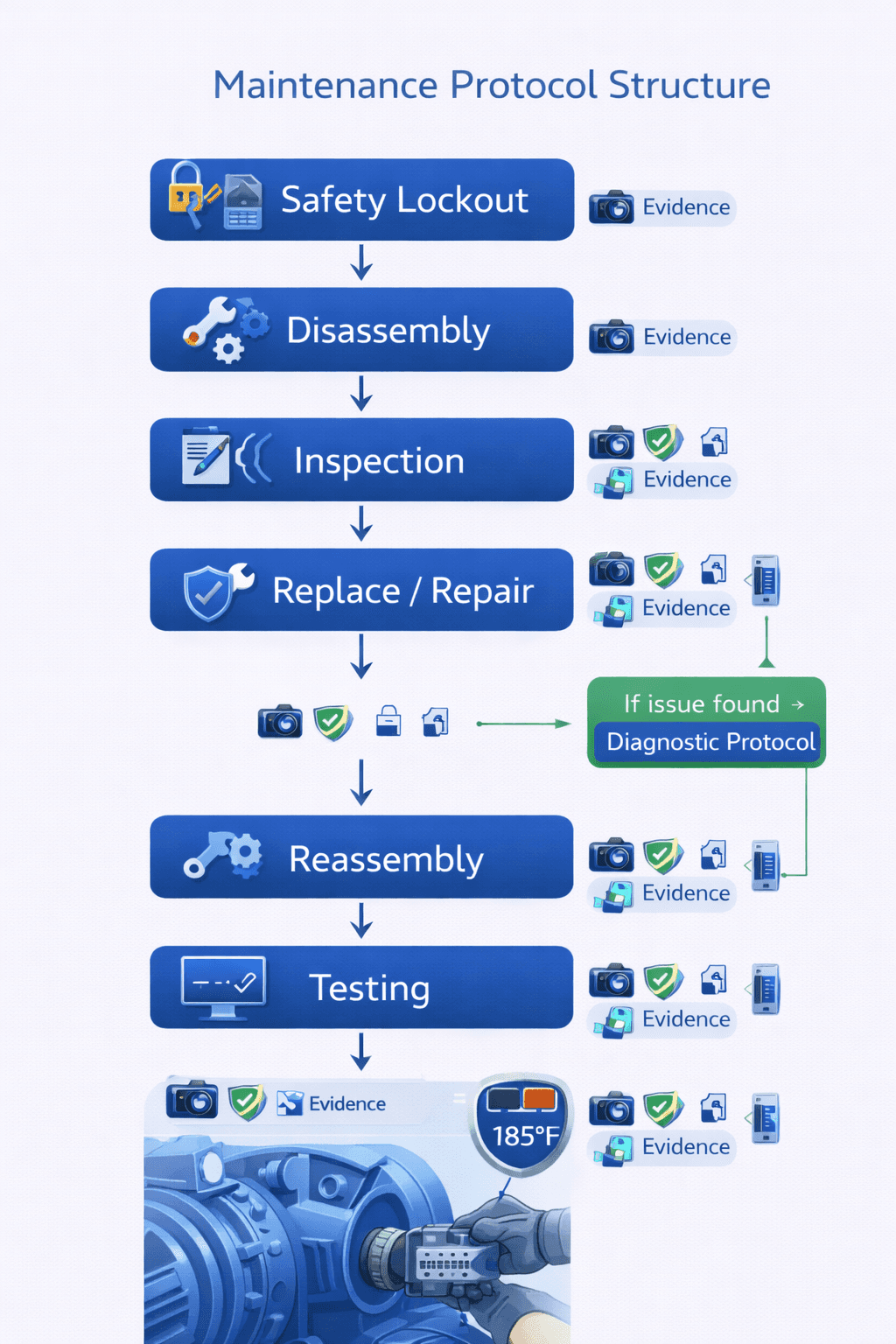
Structured maintenance protocols ensure consistent execution across preventive and corrective activities
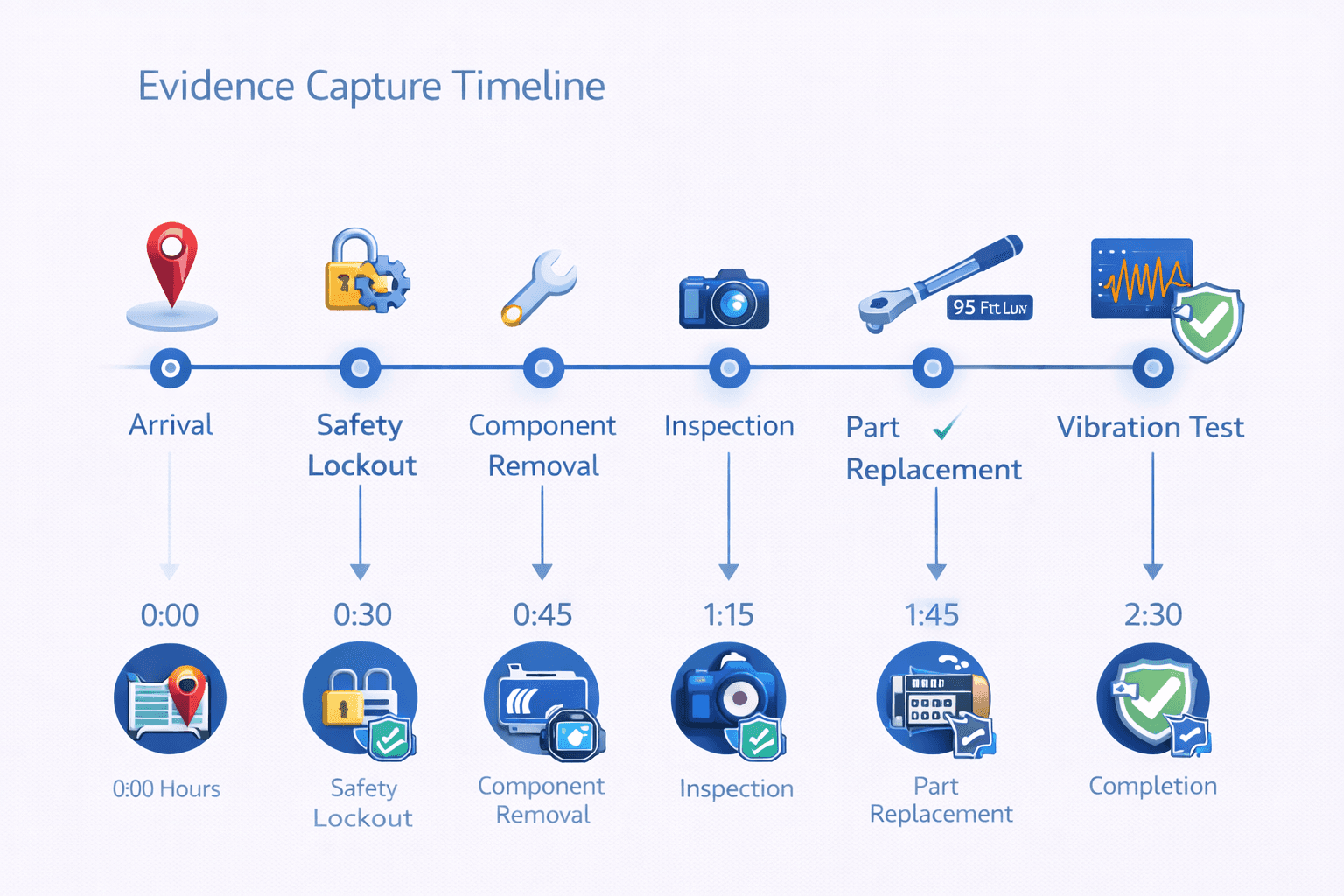
Real-time evidence capture at each maintenance step creates a complete chronological record
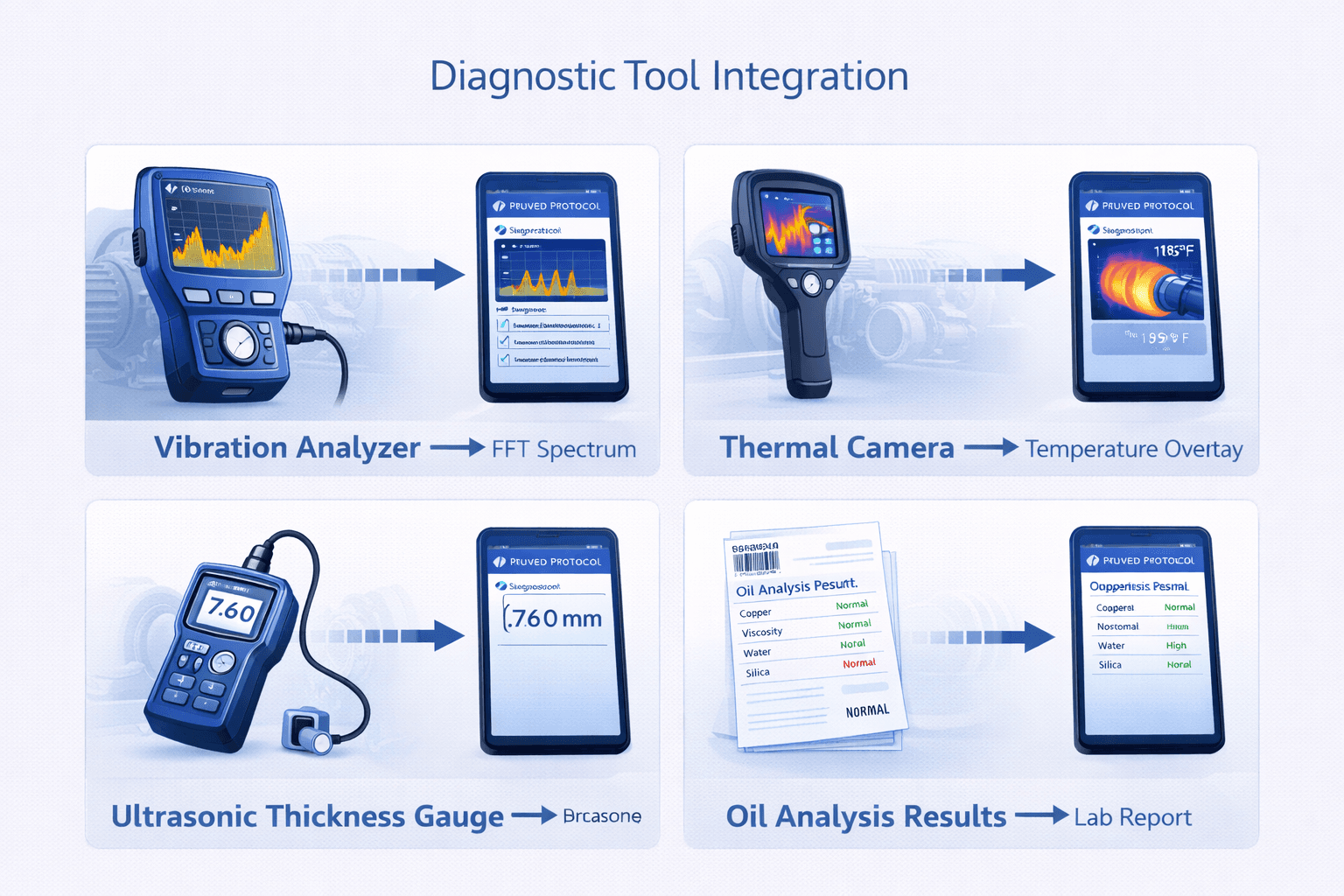
Automated integration with diagnostic tools eliminates manual data transcription and errors
Real-World Maintenance Applications
Heavy Equipment Preventive Maintenance
Mining, construction, and industrial equipment requires rigorous preventive maintenance:
- • Lubrication with correct grease type and quantity verification
- • Filter replacement with part traceability
- • Wear measurement with baseline comparison
- • Fluid analysis with lab report integration
Facility Systems Maintenance
HVAC, electrical, and process systems require documented maintenance:
- • HVAC filter replacement and airflow verification
- • Electrical connection inspection with thermal imaging
- • Pump seal replacement with alignment verification
- • Valve calibration with before/after testing
Fleet Maintenance
Vehicle and equipment fleets require standardized maintenance execution:
- • Oil change with fluid specification verification
- • Brake inspection with pad thickness measurement
- • Tire rotation with tread depth recording
- • Safety system testing with functional verification
Implementing Protocol-Driven Maintenance
Start with High-Consequence Equipment
You do not need to protocol-ize all maintenance immediately. Start with equipment where maintenance quality has the biggest impact:
- • Safety-critical equipment
- • High-downtime-cost assets
- • Equipment with regulatory requirements
- • Assets with recurring failures
Define Critical Verification Points
Not every maintenance step requires evidence capture. Focus on steps that determine quality:
- • Part installation with correct specification
- • Torque application to specification
- • Measurements showing acceptable condition
- • Functional testing after maintenance
Integrate with Existing Systems
Pruved connects to CMMS, ERP, and parts management systems. Maintenance records flow automatically. No duplicate data entry.
The Bottom Line
Maintenance documentation should prove work was done correctly. Not just that tasks were checked off. Actually done correctly.
Protocol-driven maintenance execution provides that proof. Every task defined. Every step verified. Every record sealed cryptographically.
When maintenance is complete, you have evidence that the work was done right.
Ready to Verify Your Maintenance Execution?
See how protocol-driven maintenance documentation works for your operations.
Get Started