Inspection & Testing Evidence
Creating audit-ready inspection records with verifiable evidence that proves compliance and identifies issues.
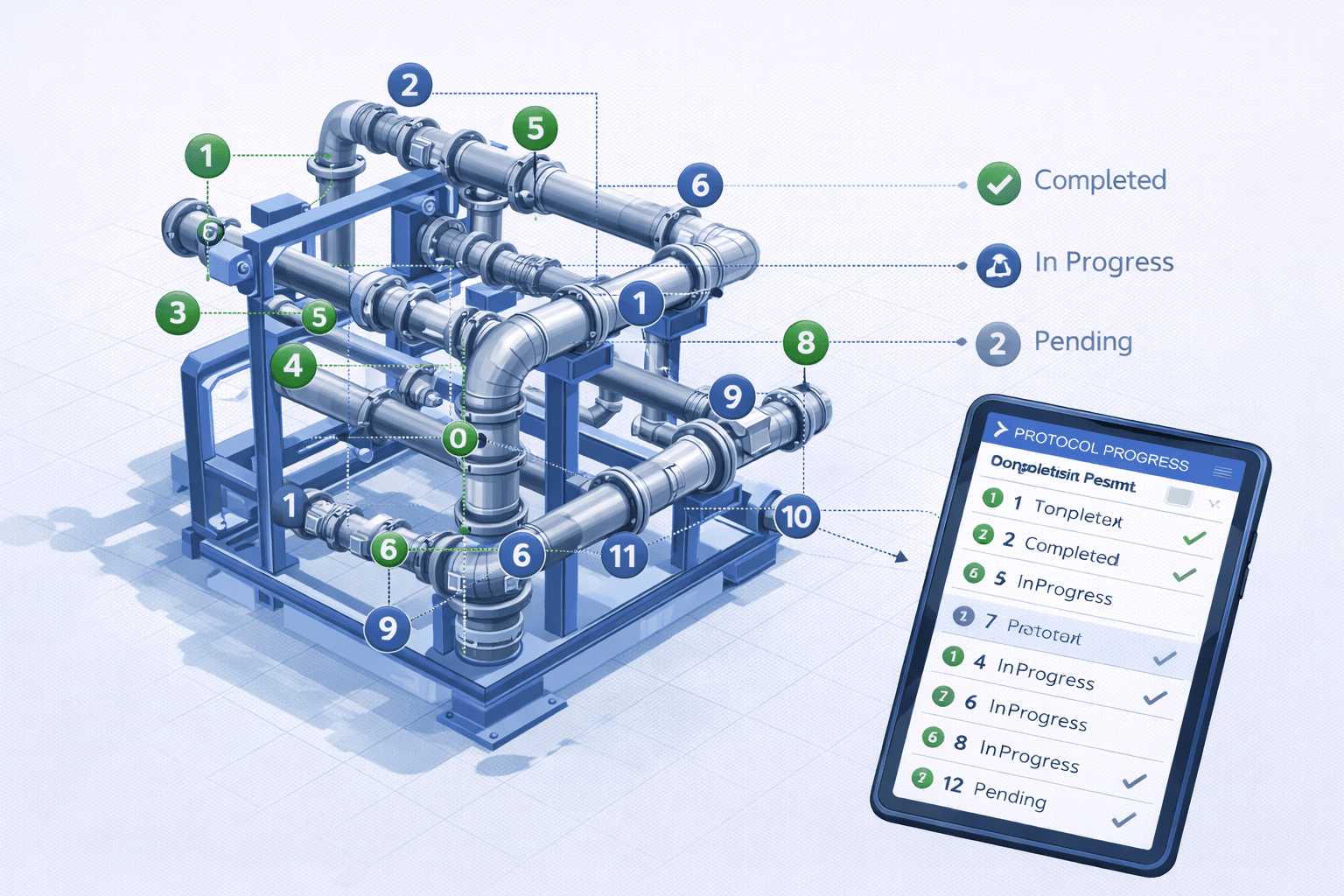
Inspections Verify Compliance and Detect Issues
Inspections are performed to verify compliance with specifications, identify defects, and assess equipment condition. Visual inspections. Dimensional measurements. Non-destructive testing. Load testing. Each inspection produces findings.
But when an inspection is complete, can you prove what was inspected and what was found? Inspection reports document conclusions. But reports alone do not provide audit-ready evidence.
The Inspection Evidence Problem
Traditional inspection documentation creates gaps in auditability:
Findings without supporting evidence
Report states "crack detected," but where is the photo? What are the dimensions? How does it compare to acceptance criteria?
Measurements without calibration records
Dimensional measurements logged, but was the measuring instrument calibrated? When was it last verified?
Inspection coverage unclear
Report says "equipment inspected," but which specific components were examined? What was the inspection scope?
No timestamped audit trail
Cannot verify who performed the inspection, when it occurred, or what the environmental conditions were
The result: inspection reports that fail audits because they lack verifiable evidence to support findings.
Protocol-Driven Inspection Execution
Pruved treats inspections as protocols. Every inspection point is defined. Every finding is documented with evidence. Every measurement is verified. Every record is cryptographically sealed.
Engineering Defines Inspection Protocols
Your quality team encodes inspection procedures as protocols. This is not a paper inspection form. It is a structured definition of what must be inspected:
- Inspection points: Specific locations, components, or parameters to inspect
- Acceptance criteria: Dimensional tolerances, surface finish requirements, defect acceptance limits
- Evidence requirements: Photos from specific angles, measurement data, test results
- Conditional logic: If defect detected, trigger non-conformance protocol
The protocol is versioned. Every inspection uses a specific protocol version. Every finding is traceable.
The App Guides Inspectors Point-by-Point
Inspectors use the Pruved app in the field. The app loads the protocol. It guides them through each inspection point. It enforces evidence capture:
- Clear inspection instructions: What to inspect and how to assess it
- Real-time evidence capture: Photos, measurements, test data captured at point of inspection
- Cannot skip inspection points: Must complete current point before proceeding
- Automatic pass/fail determination: Measurements compared against acceptance criteria automatically
Cryptographically Sealed Inspection Records
Every inspection produces a tamper-evident record:
- Inspection coverage: Every point inspected with evidence
- Findings and measurements: Raw data, not manually entered summaries
- Calibration verification: Measurement instrument calibration status at time of inspection
- Timestamp and inspector: Who performed the inspection and when
This record cannot be altered. It provides cryptographic proof that the inspection was performed correctly and findings are authentic.
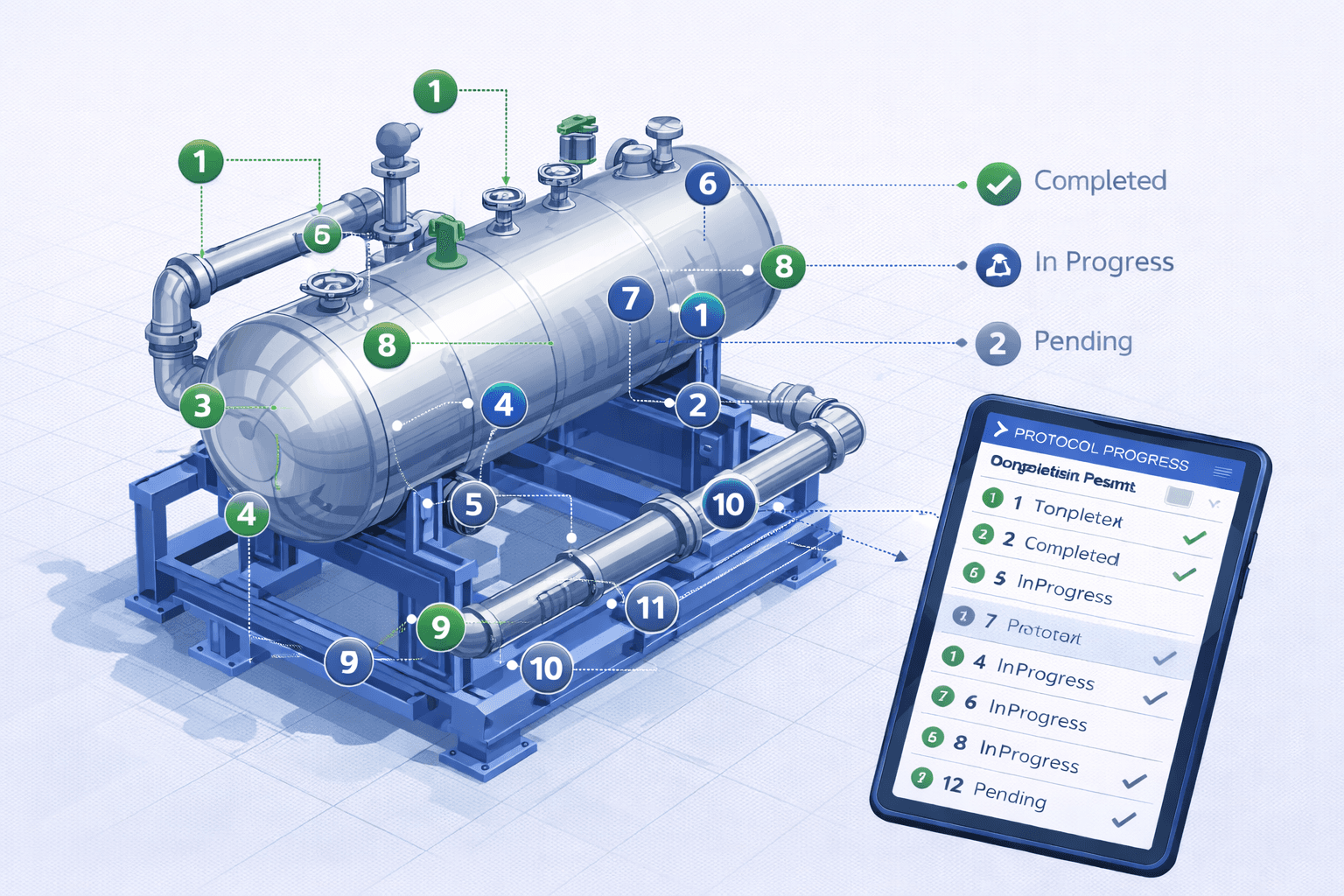
Structured inspection point mapping ensures complete coverage with no missed measurements
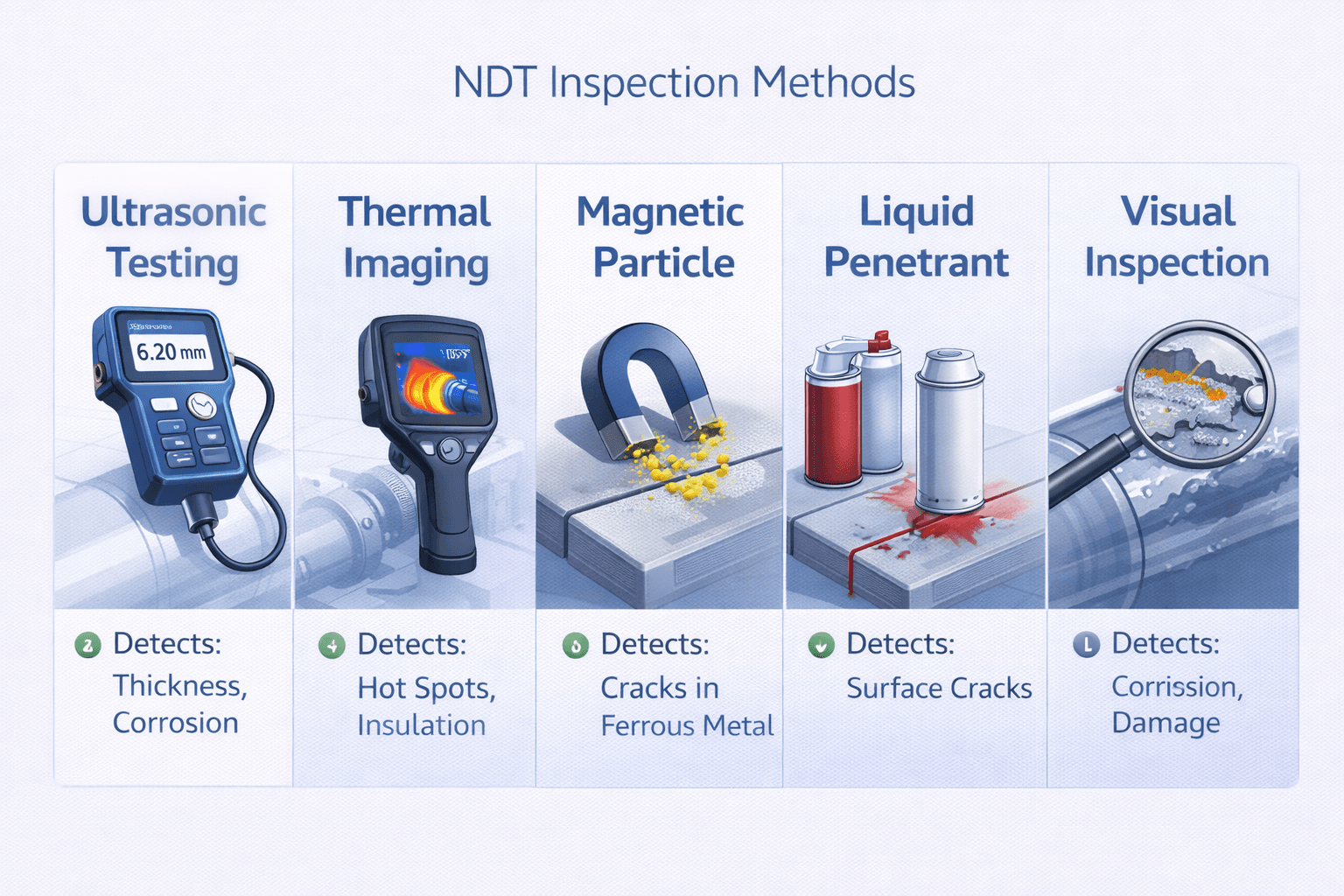
Multiple NDT methods can be integrated into a single protocol for comprehensive inspection
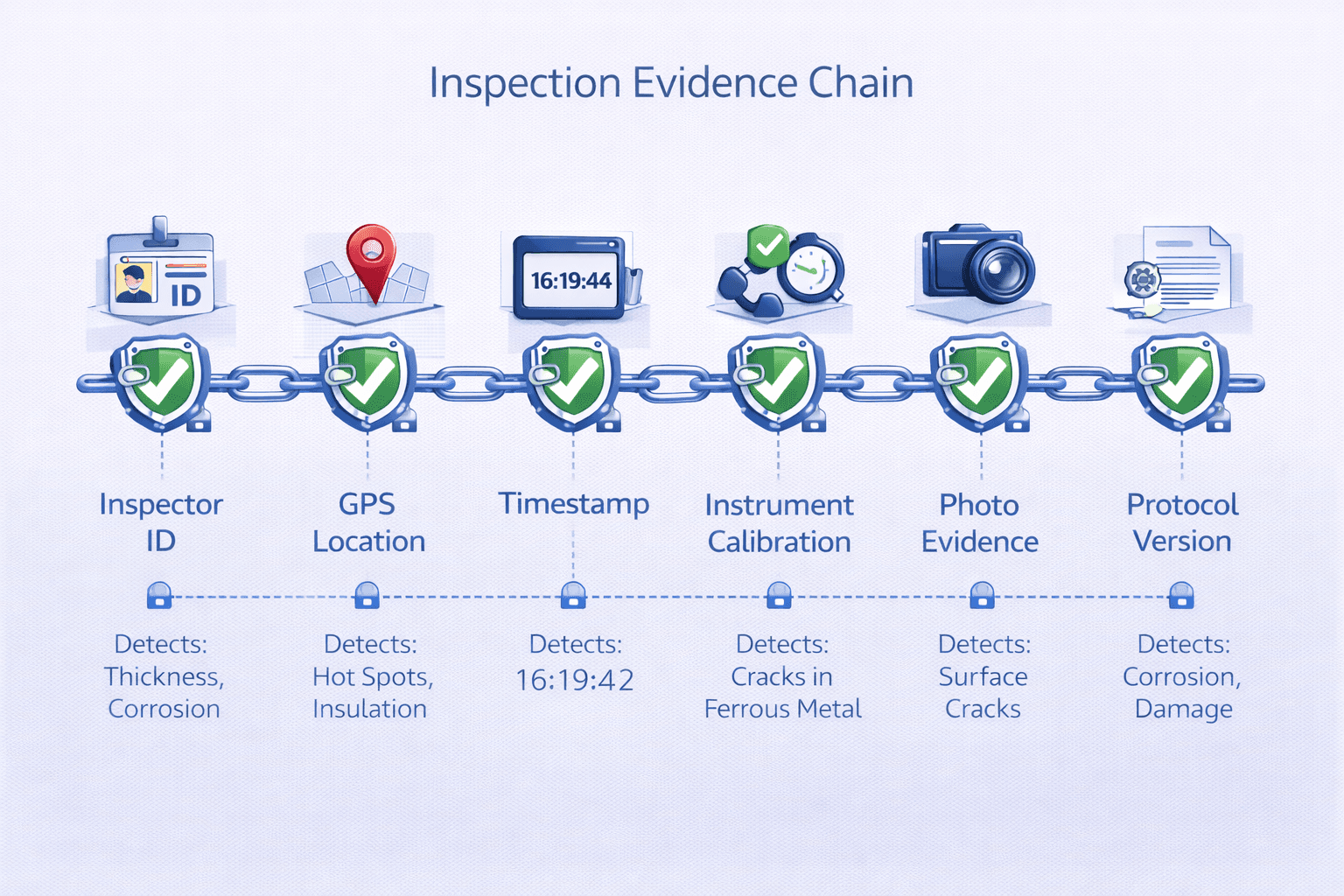
Cryptographically sealed evidence chain provides tamper-proof inspection records
Real-World Inspection Applications
Quality Inspection in Manufacturing
Production quality inspections require consistent, documented verification:
- • Dimensional measurements with calibrated instruments
- • Visual defect detection with photographic evidence
- • Surface finish verification with texture measurements
- • First article inspection with full traceability
Non-Destructive Testing (NDT)
NDT inspections require rigorous documentation for regulatory compliance:
- • Ultrasonic testing with waveform data capture
- • Radiographic inspection with digital image archival
- • Magnetic particle testing with indication photography
- • Technician certification verification before testing
Safety Inspection & Compliance
Safety and regulatory inspections must withstand audit scrutiny:
- • Structural integrity inspection with load testing
- • Pressure vessel inspection with thickness measurements
- • Electrical safety testing with insulation resistance data
- • Lifting equipment inspection with certification renewal
Implementing Protocol-Driven Inspections
Start with Audit-Critical Inspections
You do not need to protocol-ize every inspection. Start with inspections that face audit scrutiny:
- • Safety-critical inspections
- • Regulatory compliance inspections
- • Customer acceptance inspections
- • Inspections with historical non-conformances
Define Objective Acceptance Criteria
Subjective criteria like "acceptable surface finish" lead to inconsistent inspections. Define measurable criteria:
- • Dimension: 50.00 ± 0.05 mm
- • Surface roughness: Ra ≤ 1.6 μm
- • Crack length: < 5 mm (rejectable if > 5 mm)
- • Load test: withstand 150% of rated load
Integrate with Inspection Equipment
Modern inspection equipment exports data digitally. Pruved integrates with digital calipers, CMMs, NDT equipment, and test instruments to capture inspection data automatically.
The Bottom Line
Inspection documentation should withstand audit scrutiny. Not "inspection performed" checkmarks. Actual evidence that the inspection was thorough and findings are accurate.
Protocol-driven inspections provide audit-ready evidence. Every inspection point documented. Every finding supported with measurements and photos. Every record sealed cryptographically.
When an auditor reviews your inspections, you have proof that the work was done correctly.
Ready to Create Audit-Ready Inspections?
See how protocol-driven inspection documentation works for your quality program.
Get Started