System Commissioning Protocols
Proving critical systems were calibrated, tested, and validated per specification before handover.
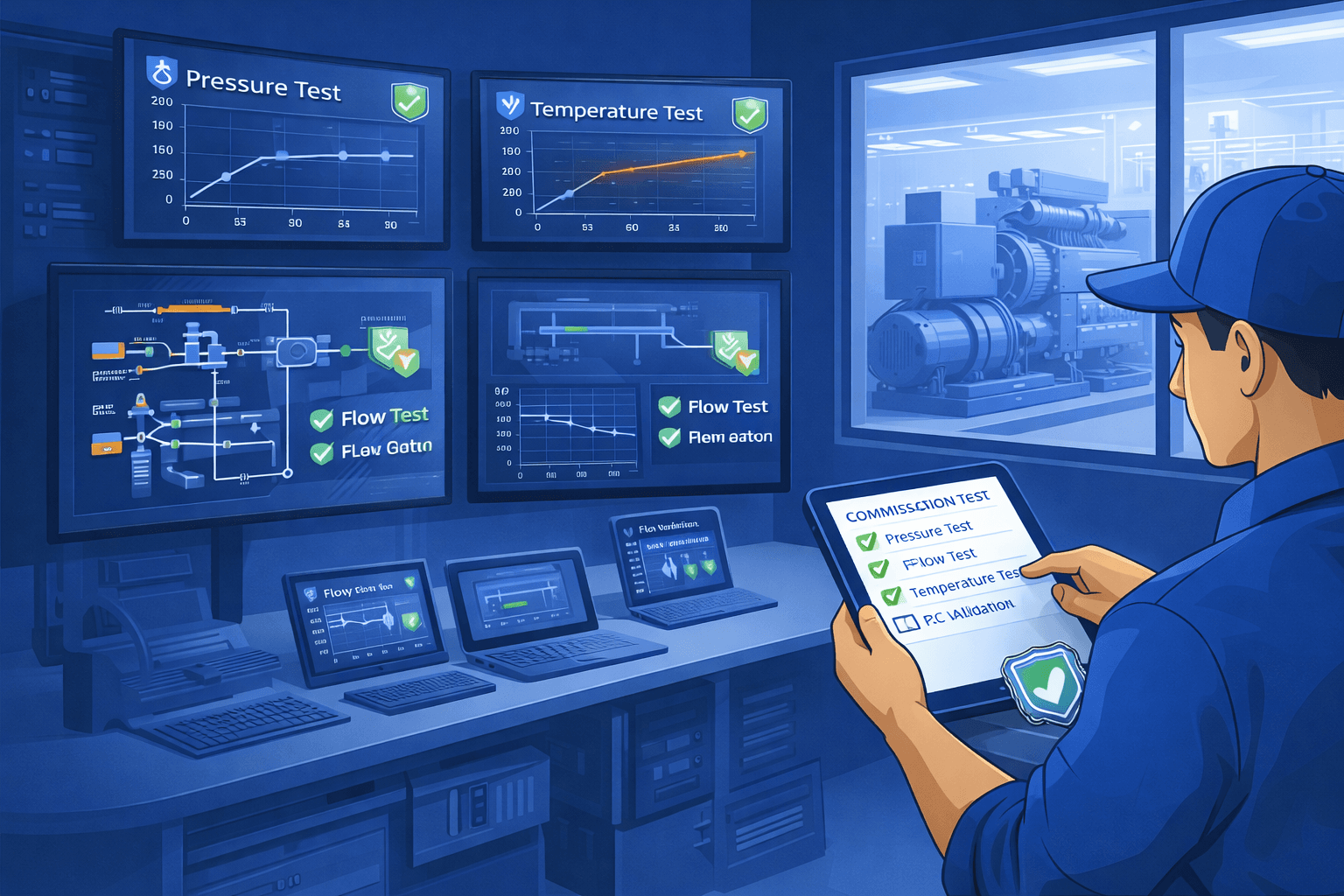
Commissioning Is Where Design Meets Reality
A commissioned system is one that has been tested, validated, and proven to operate per specification. Cooling capacity verified under load. Pressure vessels leak-tested. Control systems responding correctly to inputs. Safety interlocks functioning as designed.
When commissioning is complete, the system should be ready for production. But traditional commissioning documentation does not prove readiness. It provides reports, not evidence.
The Commissioning Evidence Problem
Commissioning documentation is often the weakest link in system handover:
Test results without raw data
Commissioning report states "flow rate: 250 GPM," but does not include the raw sensor data or calibration certificate of the measurement device
Unsigned and undated records
Cannot verify who performed the test or when it occurred
Test sequences unclear
Was the system tested cold or at operating temperature? Under load or no-load?
Failures buried in documentation
Failed tests are re-run until they pass, with no record of the failures or corrective actions
The result: systems that pass commissioning on paper but fail in production because the testing was incomplete or incorrectly performed.
Protocol-Driven Commissioning
Pruved treats commissioning as a protocol. Every test is defined. Every parameter is specified. Every measurement is captured with evidence. Every result is cryptographically sealed.
Engineering Defines Commissioning Protocols
Your engineering team encodes the commissioning procedure as a protocol. This is not a commissioning checklist. It is a structured definition of what must be tested and how:
- Test sequence: Pre-start checks, cold commissioning, hot commissioning, performance testing
- Pass/fail criteria: Flow rate within 5% of design, pressure drop below 10 PSI, temperature stability within 2°C
- Evidence requirements: Sensor data, photos of gauge readings, video of system operation, calibration certificates
- Conditional logic: If test fails, trigger corrective action protocol and re-test
The protocol is versioned. Every commissioning uses a specific protocol version. Every test is traceable.
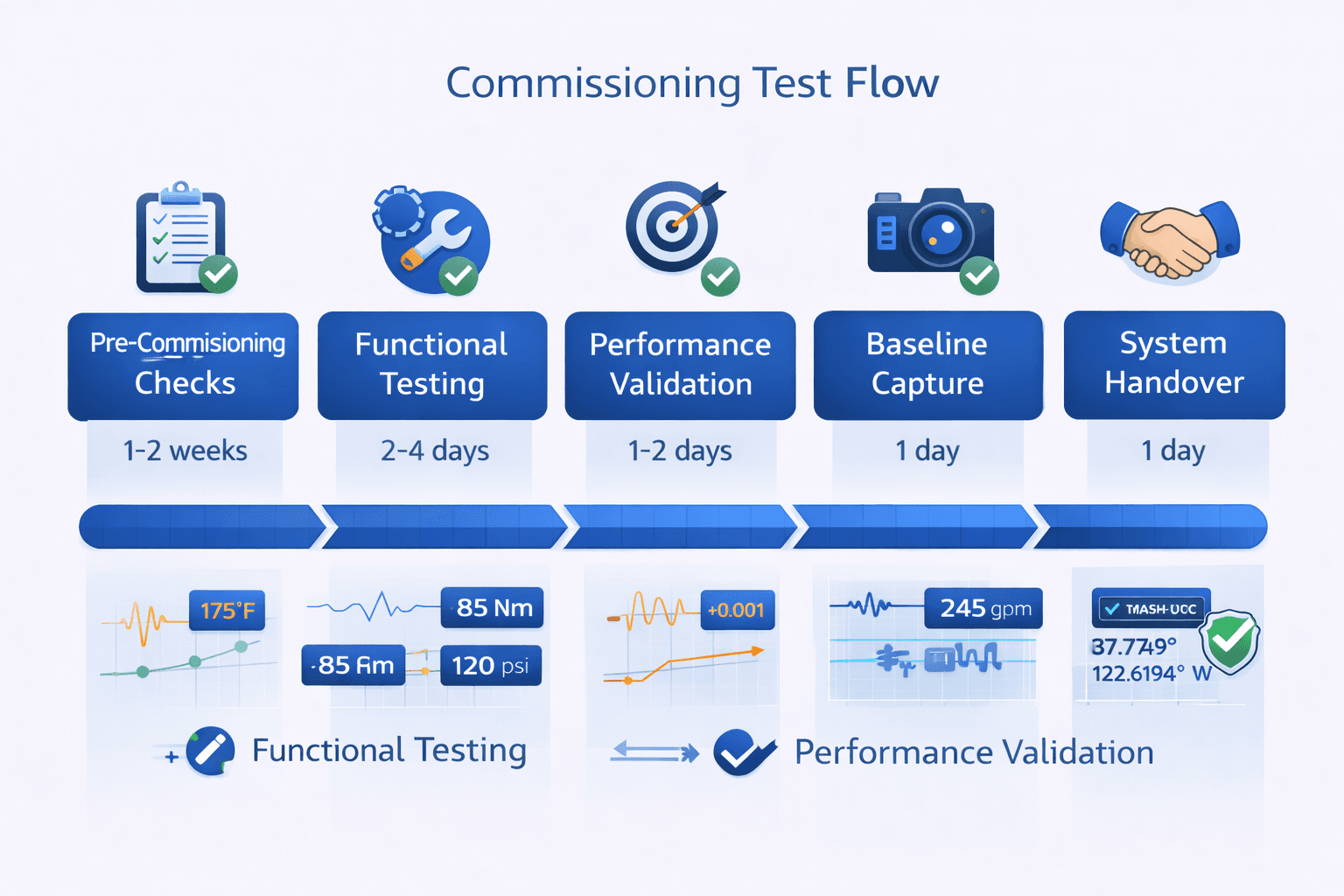
Protocol-driven commissioning follows a structured test sequence with mandatory validation checkpoints
The App Enforces Test Procedures
Commissioning technicians use the Pruved app on-site. The app loads the protocol. It guides them through each test. It enforces the sequence:
- Step-by-step test instructions: Clear guidance for each commissioning step
- Real-time data capture: Sensor integration for automatic data collection
- Cannot skip tests: Must complete current test before proceeding
- Failure documentation: Every failed test is recorded with corrective actions
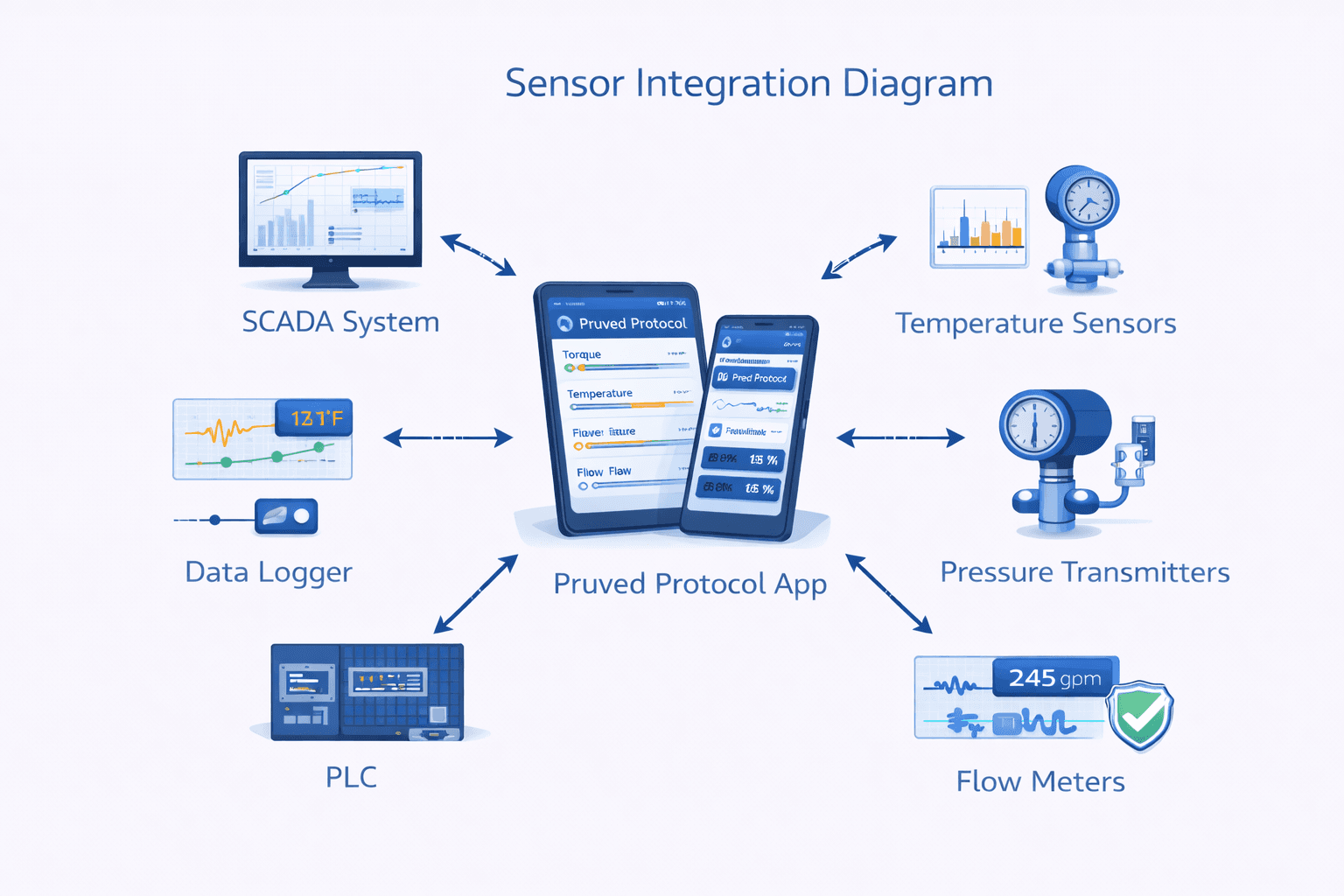
Automated sensor integration captures real-time data directly from instruments without manual transcription
Cryptographically Sealed Commissioning Records
Every test produces a cryptographically sealed record:
- Test parameters: What was tested and what the acceptance criteria were
- Raw measurement data: Sensor readings, not manually entered values
- Test conditions: Temperature, pressure, flow rate, load conditions
- Timestamp and operator: Who performed the test and when
This record is tamper-evident. It cannot be altered after creation. It provides cryptographic proof that commissioning was completed correctly.
Real-World Commissioning Applications
HVAC System Commissioning
Commercial HVAC systems require extensive commissioning to verify performance:
- • Airflow measurements at every diffuser
- • Temperature and humidity control verification
- • Energy consumption under load
- • Control system response testing
Industrial Process Equipment
Process equipment commissioning requires validation of all operating parameters:
- • Flow rate calibration and verification
- • Pressure and temperature control
- • Safety system interlock testing
- • Process performance under design conditions
Power Generation Systems
Power generation commissioning demands rigorous testing:
- • Load testing at design capacity
- • Generator synchronization verification
- • Protection system response testing
- • Efficiency measurements under various loads
Implementing Protocol-Driven Commissioning
Start with Critical Systems
You do not need to protocol-ize every commissioning activity. Start with systems where commissioning quality matters most:
- • Safety-critical systems
- • High-value equipment
- • Systems with performance guarantees
- • Systems with regulatory requirements
Define Acceptance Criteria Precisely
Vague acceptance criteria like "system operates normally" cannot be verified. Define precise, measurable criteria:
- • Flow rate: 250 ± 12.5 GPM
- • Temperature stability: ± 2°C over 30 minutes
- • Pressure drop: < 10 PSI
- • Control system response: < 5 seconds
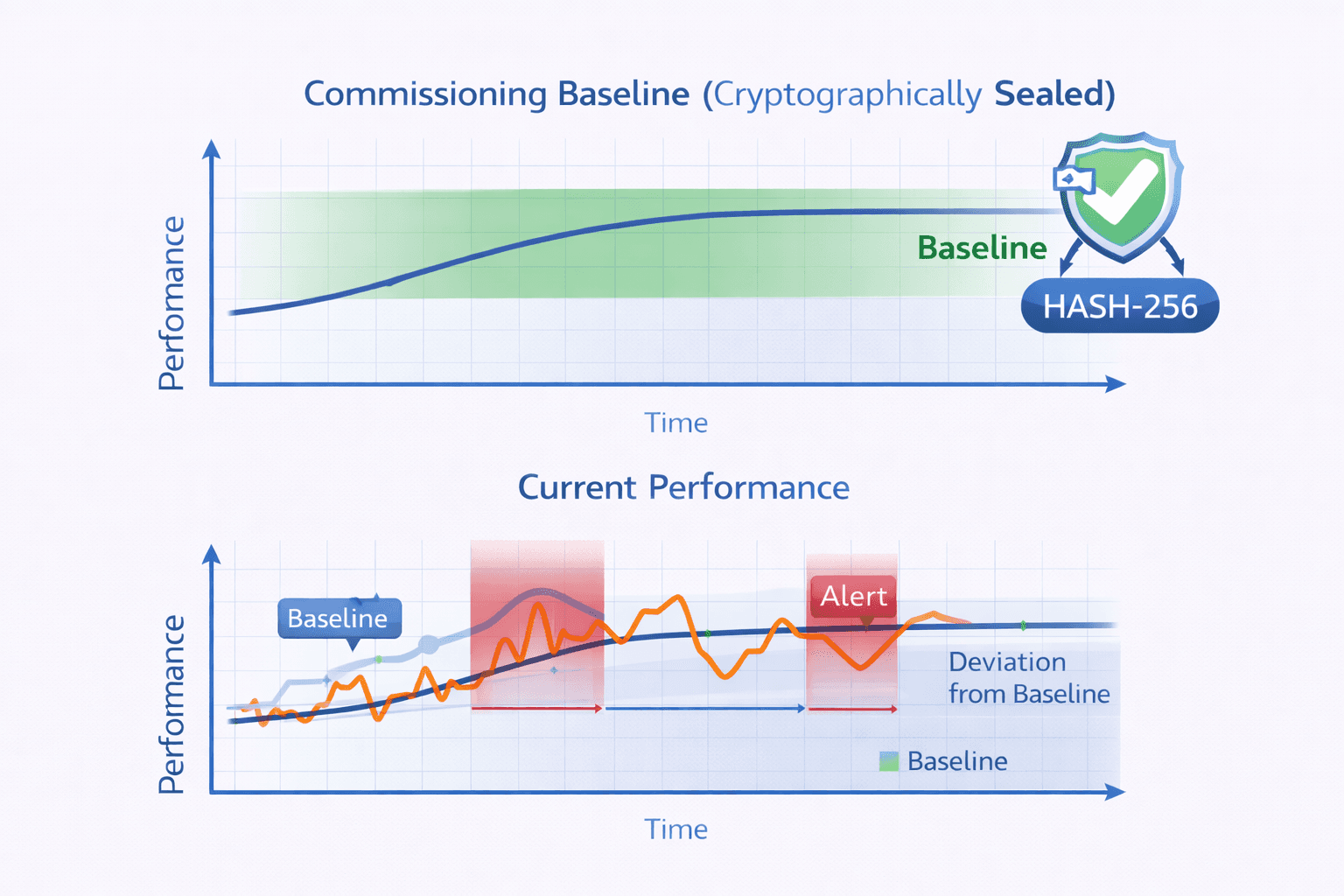
Real-time comparison against baseline specifications ensures systems meet performance requirements
Integrate with Test Equipment
Modern test equipment can export data digitally. Pruved integrates with sensors, data loggers, and test instruments to capture measurements automatically without manual transcription.
The Bottom Line
A commissioned system should be production-ready. Not "probably ready" or "passed commissioning checklist." Actually ready.
Protocol-driven commissioning provides that certainty. Every test defined. Every parameter measured. Every result sealed cryptographically.
When you hand over a system, you have proof that it was commissioned correctly.
Ready to Verify Your Commissioning Process?
See how protocol-driven commissioning documentation works for your systems.
Get Started